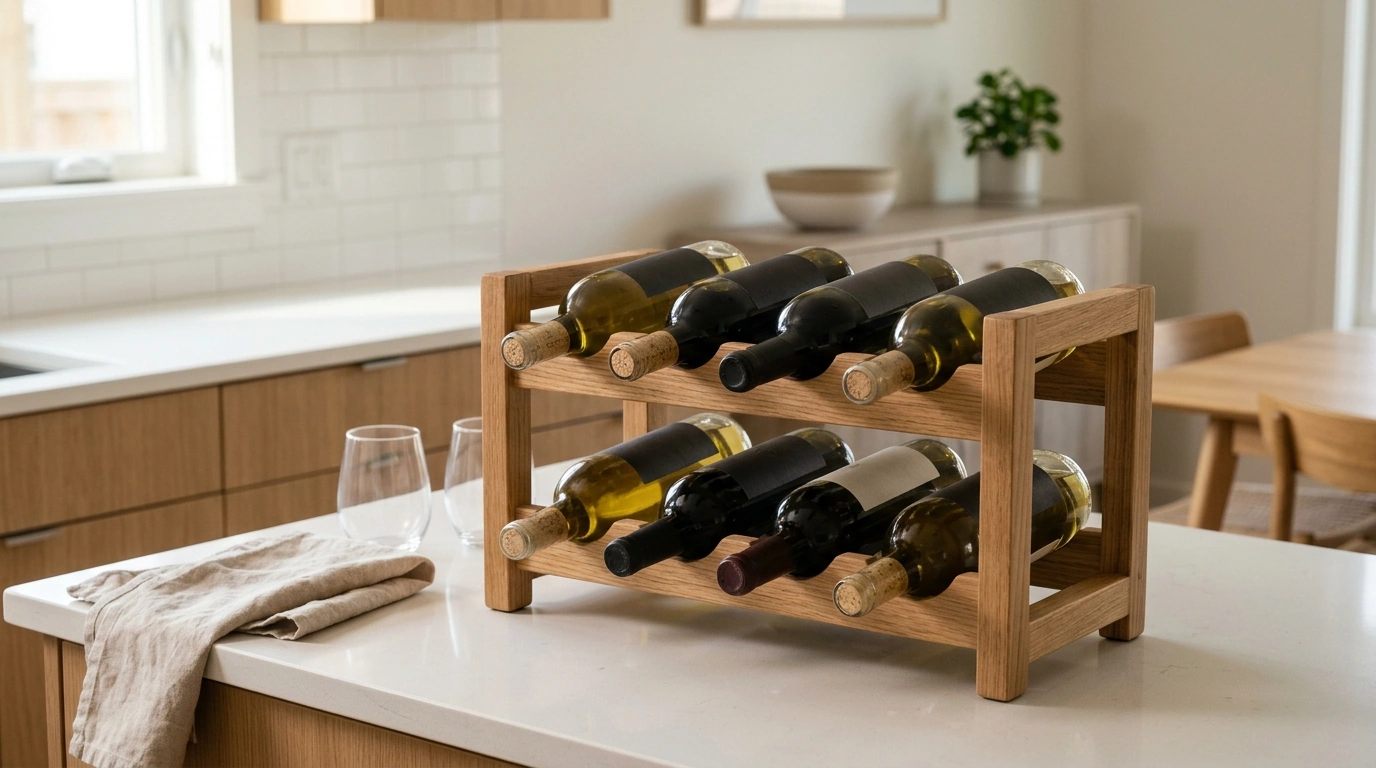
A two-tier wooden wine rack keeps bottles organized, easier to grab, and safely stored without taking over the counter. Whether you’re building a small home bar or simply tired of bottles rolling around a pantry shelf, this style of rack offers a clean, compact upgrade. Below are practical tips on where it fits best, what to look for in a sturdy build, how to set it up for daily use, and how to keep both the bottles and the wood looking their best.
If you want an uncomplicated, countertop-friendly solution, the 2-Tier Wooden Wine Rack is a simple way to keep a small collection tidy without committing to a full cabinet or built-in storage.
Placement can make the difference between a rack that’s genuinely convenient and one that becomes visual clutter. Aim for a spot that’s stable, easy to access, and away from heat and bright light.
| Location | Why it works | What to avoid |
|---|---|---|
| Kitchen counter | Fast access during cooking and hosting | Near oven, stove, or sunny window |
| Dining room sideboard | Easy to serve at meals, looks decorative | Wobbly furniture or heavy foot-traffic edges |
| Pantry or cabinet shelf | Keeps bottles tidy and protected from light | Tight shelves that press on bottle necks |
| Bar cart/console | Great for entertaining and staging glassware | Unstable carts or uneven flooring |
Not all small racks feel equally solid. A well-built two-tier design should keep bottles steady even when the rack is nudged or when you remove a bottle from the top row.
A compact rack works best when it’s arranged with real-life routines in mind—what you drink most often, what you’re saving, and what shapes you tend to buy.
For a more complete setup, pair the rack with a few essentials—glassware, a corkscrew, and a small tray—and keep other helpful ideas bookmarked in Kitchen Gadgets You Can’t Live Without | Ultimate Guide to Useful Kitchen Gadgets for Every Home.
For broader at-home storage guidance—especially around temperature, light, and vibration—these references are helpful: Wine Spectator’s wine storage basics, Decanter’s guide to storing wine at home, and the University of Minnesota Extension overview on temperature, light, and vibration.
A two-tier wooden rack is a practical choice for small kitchens, dining nooks, and starter home bars. It keeps a casual collection visible and grab-and-go, without turning your counter into a maze of bottles. If you’re refreshing your space more broadly, a small habit—like keeping clutter-reducers and reusables within reach—can help the area feel calmer; the Eco-Friendly Kitchen Swaps Checklist | Sustainable Kitchen Guide | Digital Download for Zero-Waste Living can be a quick reference for simple upgrades that pair nicely with a cleaner bar setup.
Yes—horizontal storage is especially helpful for bottles sealed with cork because it helps keep the cork from drying out. For many everyday bottles, short-term storage either way is usually fine, but consistent temperature and avoiding bright light matter most.
Avoid spots near ovens, stoves, radiators, or sunny windows, and keep it away from vibrating appliances like dishwashers or laundry machines. A cooler, darker, and more stable area helps bottles stay in better condition.
Capacity varies by design, but many two-tier countertop racks hold roughly 6 to 12 bottles. Wider bottles (like some sparkling or Burgundy-style shapes) can reduce the number of usable slots, so it’s best to confirm the specific product’s listed capacity.












Leave a comment