Composting kitchen scraps turns everyday food waste into a dark, crumbly soil booster for houseplants, gardens, and containers. With a simple balance of “greens” (wet, nitrogen-rich materials) and “browns” (dry, carbon-rich materials), you can reduce trash, cut odors, and build healthier soil over time. Below are beginner-friendly setup options, a quick guide to what to add (and skip), an easy routine to prevent pests, and straightforward fixes for common compost problems like fruit flies or slow breakdown.
Food scraps don’t belong in the trash if you can help it. When organic waste breaks down in landfills, it often decomposes in low-oxygen conditions that can create methane emissions. Composting at home keeps those nutrients cycling locally while shrinking the amount of garbage you send out each week.
Finished compost improves soil structure, boosts water retention, and supports nutrient availability for plants. It can make potting mixes more resilient and help garden beds hold moisture during hot spells. Best of all, composting is a small daily habit: collect scraps, add a little “brown” cover, and keep things breathing.
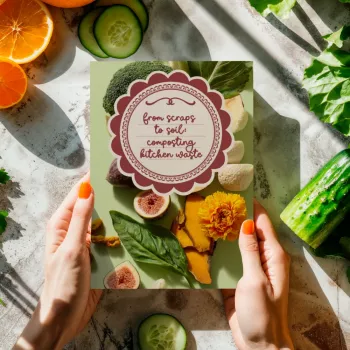
For practical, step-by-step help you can keep on your phone or tablet, consider From Scraps to Soil: Composting Kitchen Waste Guide (digital download).
Compost works when microbes have what they need: nitrogen, carbon, oxygen, and water. Think of it like building a breathable “lasagna” that stays lightly damp.
Fresh fruit and veggie scraps, coffee grounds, tea leaves, and fresh plant trimmings are classic greens. They add moisture and nitrogen, which helps heat and speed breakdown.
Dry leaves, shredded cardboard, uncoated paper, and non-greasy paper towels are reliable browns. Browns keep the pile fluffy, reduce odor, and prevent a wet, compacted mass.
Oxygen prevents the sour, “garbage” smell that happens when scraps rot without enough air. Depending on your system, you’ll stir, turn, or tumble to keep air moving. Moisture should feel like a wrung-out sponge: damp but not dripping. Too wet leads to odor; too dry slows everything down.
A simple balancing rule that works for most beginners: every time you add a container of scraps, add a generous handful (or two) of browns on top.
The best compost system is the one you’ll actually maintain. Pick a method that matches your living space, climate, and tolerance for turning or monitoring.
Use a lidded container to collect peels and grounds during the day, then transfer them to your main compost. This keeps routines tidy and makes it easier to cover scraps promptly.
Great for yards and gardens. It’s flexible, low-cost, and can handle larger volumes—especially if you have access to fall leaves or yard trimmings for browns.
A tumbler makes turning easy and can speed composting by improving aeration. It’s also helpful for pest control when used correctly (no exposed fresh scraps, and a steady brown cover).
Ideal for apartments and smaller households. Red wigglers thrive on fruit/veg scraps and paper bedding. Keep it balanced and avoid overfeeding.
Bokashi is compact and can handle many kitchen scraps in tight spaces. The fermented output is typically buried or composted further to finish breaking down.
Start simple. Consistent inputs are easier to balance and far less likely to attract pests. Fruit/vegetable scraps, coffee grounds, eggshells, and shredded paper/cardboard are beginner-friendly staples. Avoid the materials most likely to cause odor, rodents, or pathogen concerns in basic home systems. If you’re unsure about a scrap, freezing it buys time until you’re confident it belongs in your setup.
| Item | Best Category | Notes |
|---|---|---|
| Fruit & vegetable scraps | Green | Chop large pieces to speed breakdown; bury under browns to deter pests |
| Coffee grounds & paper filters | Green (filters as Brown) | Mix well; grounds can clump—add browns for airflow |
| Eggshells | Neutral/Mineral | Rinse and crush for faster breakdown |
| Bread, rice, pasta | Green (limited) | Use sparingly; bury well to reduce pests and odors |
| Citrus peels & onions | Green (limited) | Small amounts are usually fine; chop and balance with browns |
| Meat, fish, dairy, oily foods | Skip (most home piles) | Higher odor and pest risk; better for specialized systems |
| Greasy paper/packaging | Skip | Oil slows composting and attracts pests |
| Compostable plastics | Depends | Often require industrial conditions; check local guidance |
If you’re also reducing waste beyond compost, Eco-Friendly Kitchen Swaps Checklist (digital download) pairs nicely with a composting habit.
For deeper compost science and system-specific tips, see guidance from the U.S. EPA, USDA NRCS, and Cornell’s Waste Management Institute.
Chop scraps into smaller pieces, keep a steady green-to-brown balance, and maintain moisture like a wrung-out sponge. Add oxygen by turning, stirring, or tumbling so materials don’t compact into wet layers.
Small amounts may work in some systems, but cooked foods tend to increase odor and pest risk. If you add them, keep portions minimal, bury deeply under browns, and avoid oily or heavily seasoned leftovers—especially as a beginner.
Excess moisture or poor airflow is often the real issue, even with leaves present. Add more dry browns, break up clumps, turn thoroughly, and make sure scraps aren’t forming a wet, compacted mat.











Leave a comment